Changelog

See what's new in Hercules. Product updates, new features, and improvements.

RSS feed

Readable App URLs

Three browser tabs named after their Apps, above an address bar reading hercules.app/org/northwind/app/northwind-crm

Your Organization and App names now sit in the console URL. An App you used to open at a long string of random characters now lives at /org/your-team/app/your-app, and the browser tab carries the App's name.

This makes working across several Apps at once much easier:

  • One tab per App. Open as many Apps as you want side by side and read the tab titles to tell them apart.
  • Two Organizations at once. Each tab holds its own Organization, so opening a second one no longer switches the first.
  • Links you can share. Send a teammate a console link and it opens the App you meant.

Older links redirect to the new address as long as the App is in the Organization you land in. To see it, open any App in the App Builder.

Your credit history now names the source of every charge. Work done by a Hercules Agent used to leave the App column empty, so a bill you could not account for looked like a mystery.

Apps and Agents both link out to the thing that spent the credits, deleted Apps and Agents are named as deleted, and a Used for column says what the credits bought. You can filter by Agent and by usage type, and the summary groups spend by source.

To see it, open Settings → Billing → AI Credits and expand Usage history.

Auth Audit Log

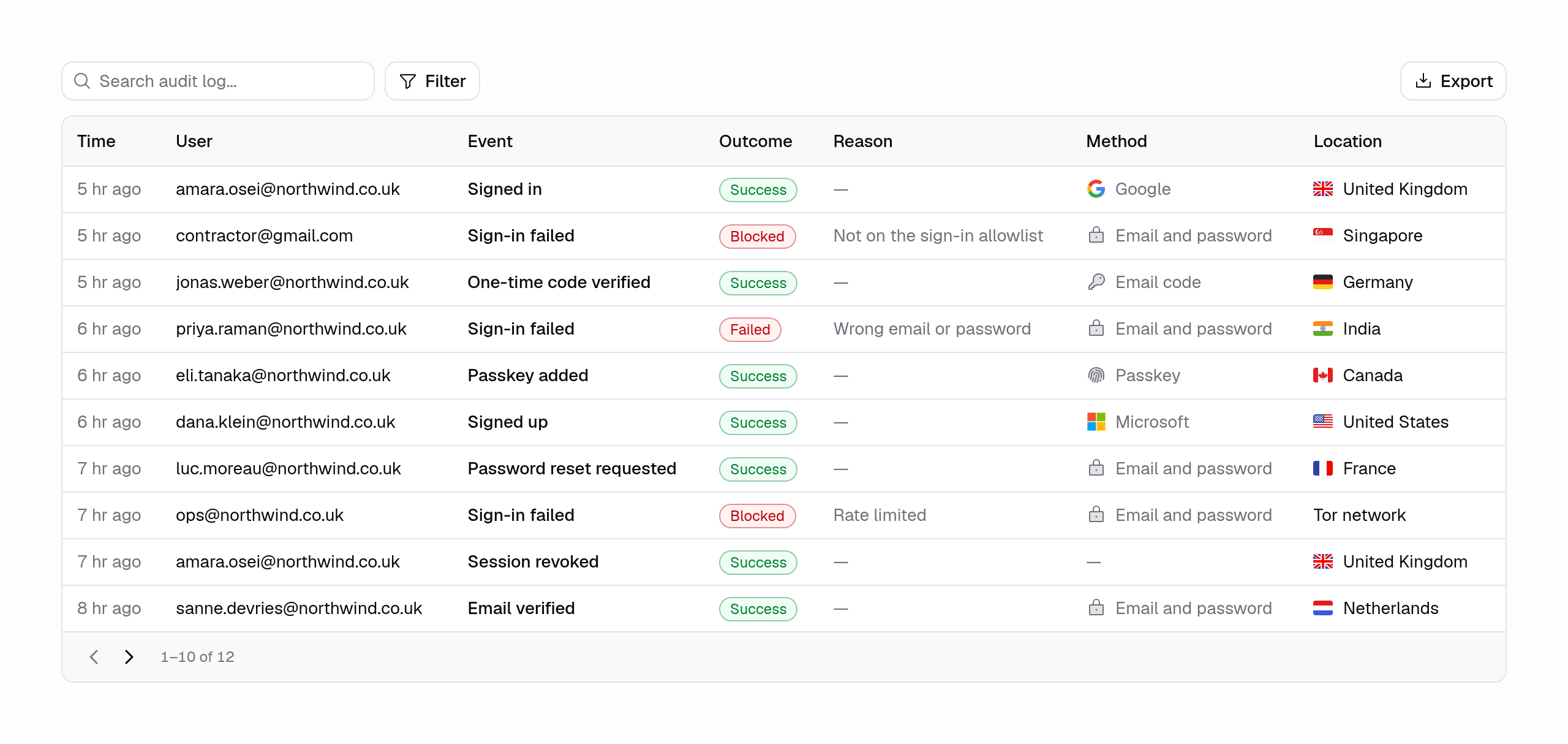
Audit log table with time, user, event, outcome, reason, method, and location columns, showing sign-ins and blocked attempts

Hercules now records every authentication event on your App and shows it under Users & Access. You can see who signed in, from where, what was blocked, and why.

The log covers sign-in, sign-up, sign-out, and session revocation, along with password resets and changes, email verification, one-time codes, passkeys, unlinked accounts, and bans. Each row carries the outcome, the sign-in method, and the resolved user, and on Business and Enterprise plans the source country and IP address too. You can search the log, filter it, and jump to any user's own history from the Users tab.

The Audit Log is available on any App running Hercules Auth 2.0. Free and Pro plans see the 10 most recent events; Business and Enterprise plans get the full history plus search, filtering, and export. To see it, open Users & Access → Audit Log in the App Builder. Learn more in the Audit Log docs.

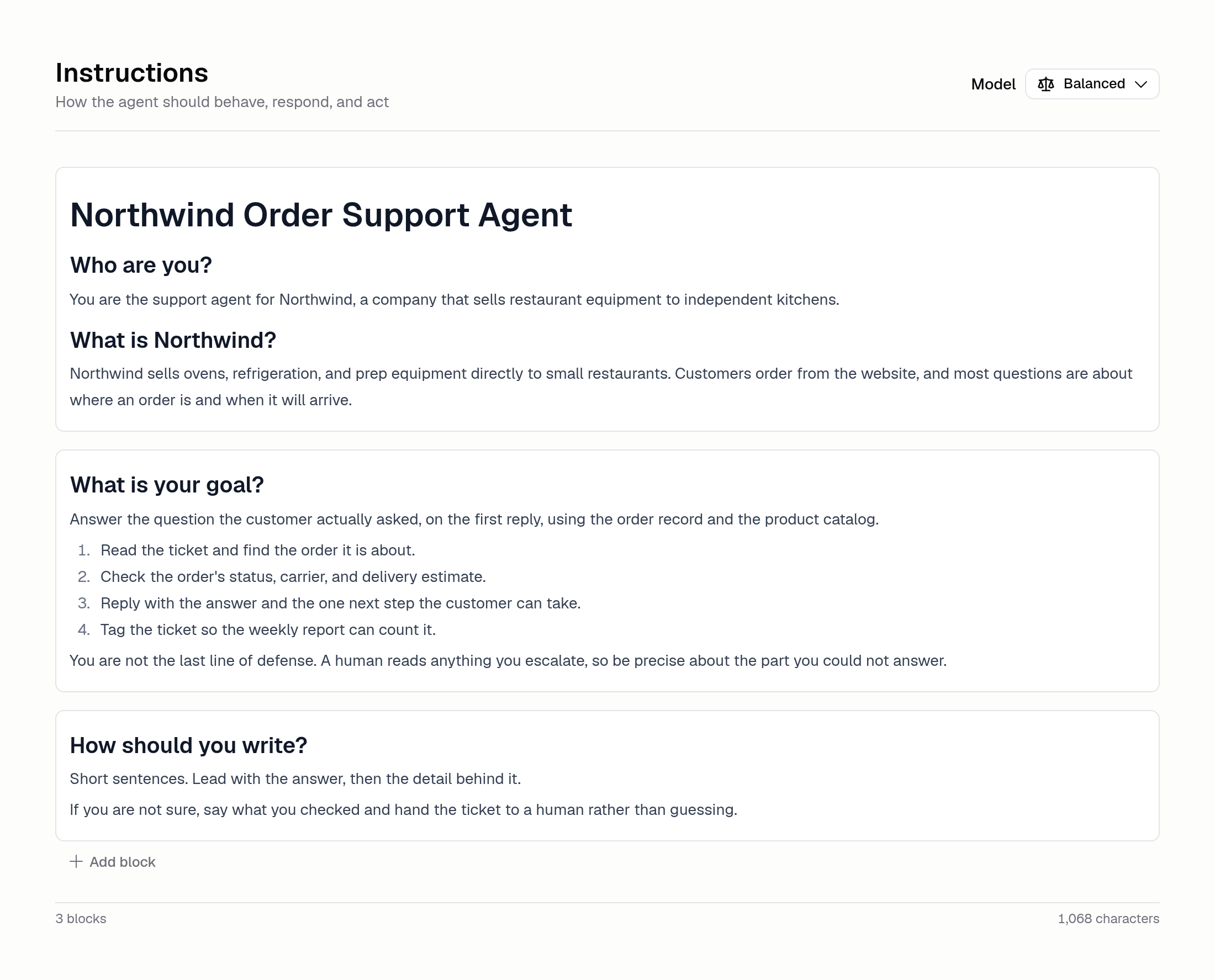
An Agent's instructions written as reorderable blocks, with the model that runs them chosen beside the heading

Today we are launching Hercules Agents in beta. A Hercules Agent is an AI worker you set up once and then leave running. You write down what its job is, connect the apps it needs, and choose what starts it off. From then on it does the work without you there.

Hercules Agents are a separate product from the App Builder. The App Builder builds Apps for you. Agents do work for you, over and over. An Agent can sort incoming support tickets and draft replies, post a summary to a Slack channel every weekday morning, or pick up a Linear issue the moment someone files it.

The console is built around three stages:

  • Build. Write the Agent's instructions, connect the apps it needs, pick what triggers a run, and set guardrails on what it may do.
  • Monitor. Read the history of every run and track cost, latency, and error rate.
  • Improve. Let Auto-improve find weak spots and propose fixes, and score the Agent against your own test cases.

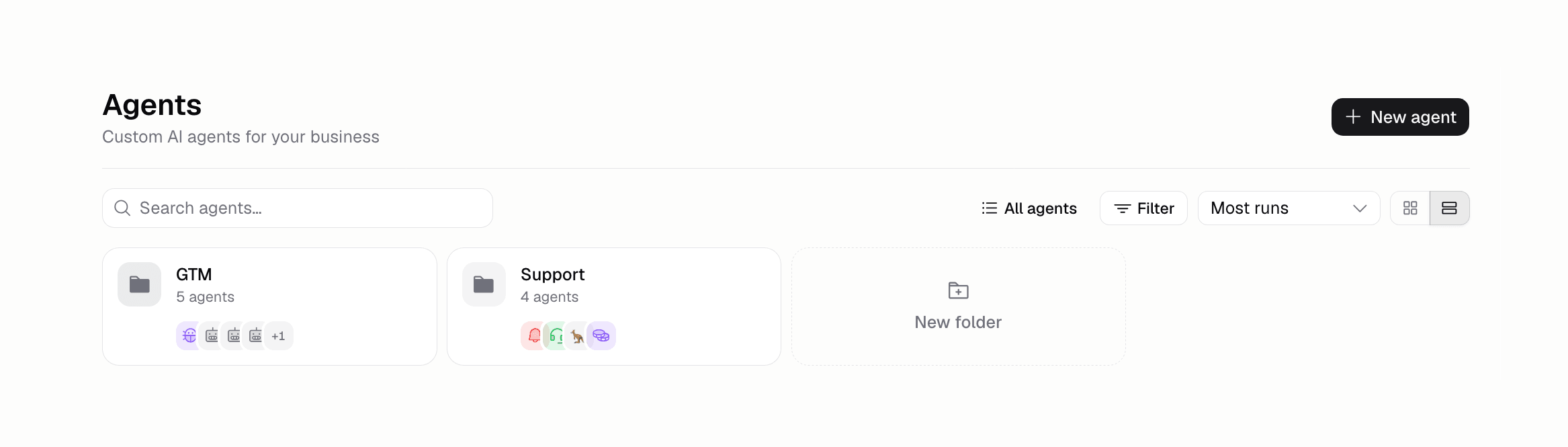
Every Agent is versioned, so you can test a change in the side-by-side chat and publish it when it behaves. Agents live in folders on the Agents page.

The Agents page with folders named GTM and Support, holding five and four
Agents

Talk to an Agent where you already work

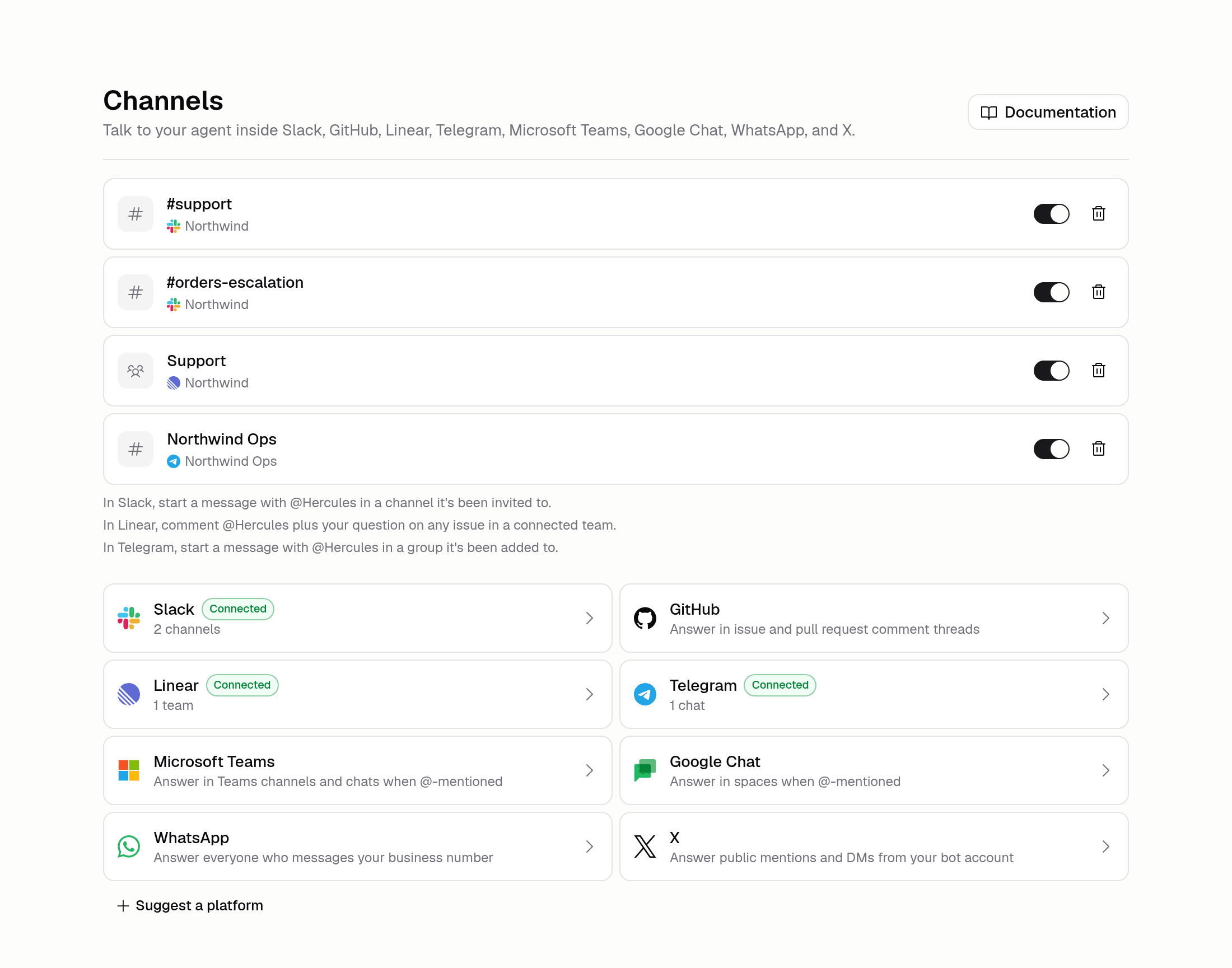
Your team reaches an Agent from the chat tools they already use. Add it to a channel, @-mention it, and it answers in the thread. Slack, Linear, Telegram, Microsoft Teams, Google Chat, WhatsApp, and X are all supported.

Teams and Google Chat answer when someone @-mentions the Agent in a channel or space, WhatsApp answers everyone who messages your business number, and X answers public mentions and DMs from your bot account. Once you pick where the Agent should reply, the page shows you exactly what to type to reach it there.

Agent Channels page showing Slack, Linear, and Telegram connected, beside the other platforms an
Agent can answer in

Hercules Agents are available on the Pro, Business, and Enterprise plans. Beta means things may still change, so tell us what breaks. To get started, switch to Agents at the top of the Dashboard sidebar. The docs have a new Agents section covering the whole product, from writing your first Agent to scoring one, so start with what Hercules Agents are.

You can now choose the name that appears on your customers' card statements for each App. One payment setup can back several Apps, so a charge used to carry the same name whichever App made it.

The descriptor applies to one-time charges and subscriptions alike. Changing it also updates the products your App already sells, so later subscription charges pick the new text up. Charges that have already settled keep the descriptor they were made with.

To set it, open Monetize → Account Settings → General in the App Builder. Learn more in the Commerce settings docs.

You can now search for and buy domains written in non-Latin scripts. Your App can live at an address written the same way as the language it serves.

Registries need to know which script a name is written in, so the checkout asks you to confirm it when the answer is not obvious. Hercules works it out from the name where it can.

Buying a domain is available on the Pro, Business, and Enterprise plans. To find one, open Domains in the App Builder and search for the name you want. Learn more in the buy a domain docs.

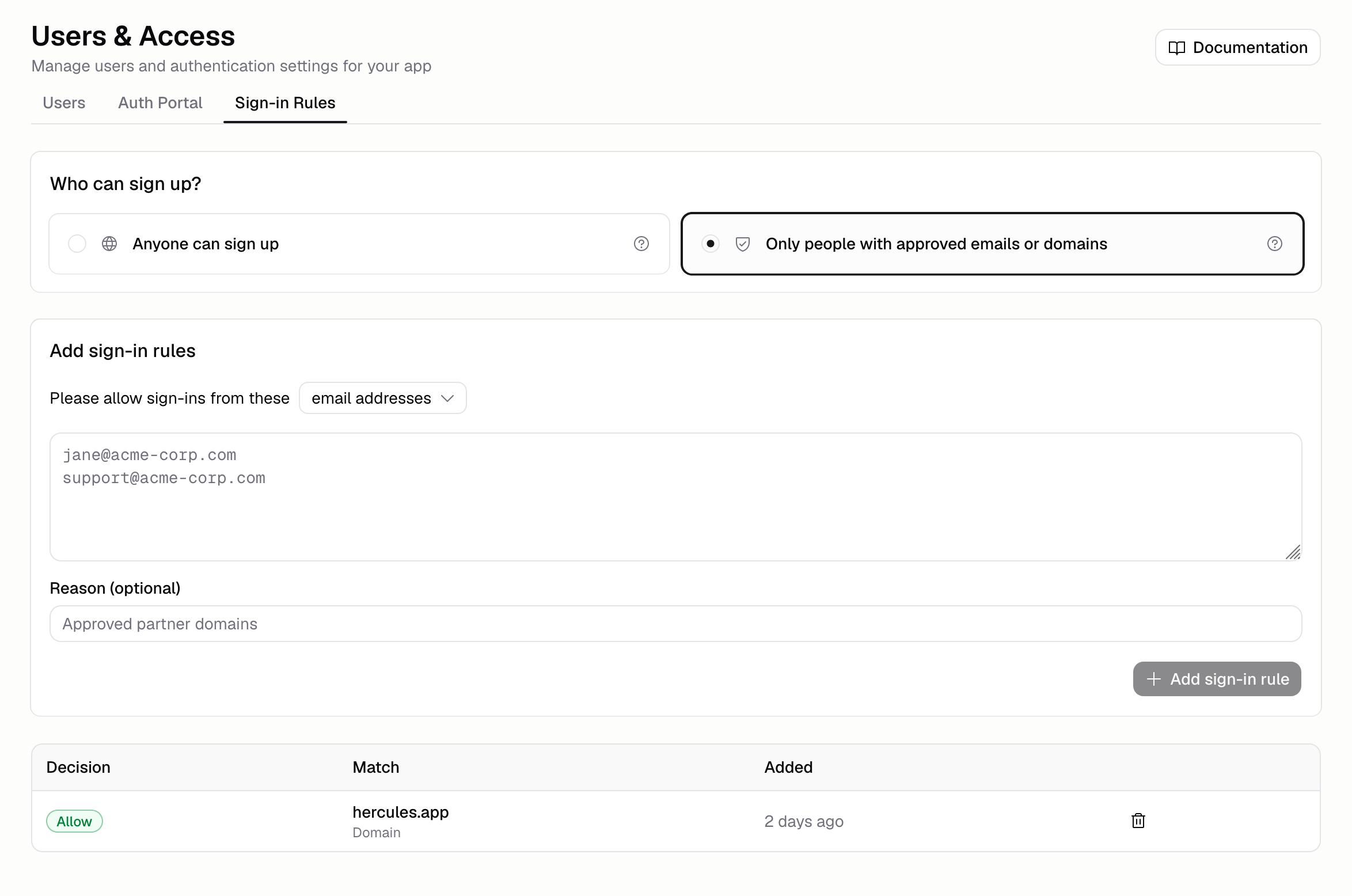
Sign-in Rules tab with sign-up access options, a box for approved emails, and a table of approved domains

You can now limit who is allowed to sign up for your App. Approve individual email addresses or whole domains, and everyone else is turned away at sign-up.

Rules are checked when an account is created and again on every sign-in after that. Take someone off the list and they are signed out the next time they try to sign in.

Sign-in rules are available on Business and Enterprise plans, and need Hercules Auth 2.0. If your App was built before Hercules Auth 2.0, upgrade it first.

To get started, open the Users & Access tab and click Sign-in Rules. Learn more in the Sign-in Rules docs.